All Categories
Featured
Get The Most From Your Maryland Solar Panel Installation ...
How Do You Discover Reliable Virginia Solar Panel Install...
What You Need From Delaware Solar Panel Installation Comp...

How To Assess Virginia Solar Panel Installation Companies For Quality
Table of Contents
- – How To Select The Best Virginia Solar Panel Ins...
- – How Top-Rated Solar Panel Installation Special...
- – Making Sense Of The 1,200 W Plug-in Solar Cap ...
- – Do HOA Covenants Influence Your Selection Of V...
- – Utilizing The Switch Together Program To Pinpo...
- – Can Your Roof Qualify For Solar Panel Installa...
How To Select The Best Virginia Solar Panel Installation Companies

Switching to renewable energy requires you to traverse the complex landscape of Virginia Solar Panel Installation Companies to ensure your home receives a high-quality, effective system. Because these installers handle every technical detail from structural integrity to electrical grid integration, selecting a partner with proven workmanship standards is essential for long-term performance. You should realize that a typical 13.99 kW residential system represents a substantial investment, costing between $30,075 and $40,689 before utilizing any available incentives. By analyzing the mechanics of system sizing, financing models, and local regulatory safeguards, you can determine how to optimize your return on investment. This guide provides the foundational knowledge you need to assess professional qualifications and identify the most dependable installers serving your area.
“Our advanced solar battery systems store excess energy, providing reliable backup power and enhancing energy independence.” — Lumina Solar
How Top-Rated Solar Panel Installation Specialists In Virginia Help With Your Financing
Financing options provided by Top-rated solar panel installation companies serving Virginia allow you to obtain a system through $0-down structures that eliminate the barrier of high initial capital requirements. By separating the acquisition of hardware from the requirement of a large cash expenditure, these models allow you to leverage future energy savings to counterbalance the monthly costs of your system.
“Virginia homeowners can take advantage of the federal solar investment tax credit (ITC), which lets you claim 30% of your total solar installation cost on your federal income taxes.” — ecowatch.com
Understanding the fundamental distinctions between these financial mechanisms is essential for identifying which approach aligns with your long-term monetary goals:
| Financing Model | Ownership Status | Financial Mechanism |
|---|---|---|
| Solar Loan | Homeowner | You remit monthly installments to a creditor until the balance is cleared. |
| Solar Lease | Installer | You remit a fixed monthly fee to utilize the equipment for a set period. |
| Power Purchase Agreement | Installer | You pay only for the electricity produced at a predetermined rate. |
When assessing these paths, weigh the trade-offs between immediate cash flow and long-term asset appreciation. A loan usually allows you to keep ownership of the system, which may be advantageous if you plan to claim available tax incentives or increase your property value. Conversely, leases and power purchase agreements often streamline maintenance responsibilities, as the contractor retains ownership and oversight of the hardware performance throughout the term of the contract.
Review the specific interest rates and contract adjustment clauses in your solar proposal to ensure the long-term payment path remains lower than your projected utility costs.
When evaluating Virginia Solar Panel Installation Companies, you must first calculate your solar system size, which averages 13.99 kW in the state, to understand how your roof solar compatibility and local daily irradiance hours—typically 4.2 to 4.7 per day—influence your total solar installation cost. You should consult a Solar Panel Installation to compare an accurate solar estimate, ensuring your chosen installer holds a solar certification to guarantee technical proficiency while navigating complex HOA solar rules and potential participation in a group solar program. To optimize your financial return, examine how net energy metering and SRECs function alongside the state property tax break for systems up to 25 kW, while deciding if a battery backup, costing $10,000 to $13,000, or a UL-certified plug-in solar system capped at 1,200 watts better fits your energy independence goals. By concentrating on the average per-watt cost of $2.53, you can better justify the total $30,075 to $40,689 investment, or the $18,000 to $22,000 range for smaller arrays, as you utilize available solar tax incentives to lower your long-term expenditure.
Making Sense Of The 1,200 W Plug-in Solar Cap For Your Solar Panel Installation
A 1,200 W plug-in solar cap is the highest power capacity allowed for streamlined, wall-outlet solar systems in Virginia as of July 1, 2026. Unlike a conventional rooftop array that requires a complex electrical interconnection managed by a professional, these plug-in solar systems are designed for immediate, low-barrier energy generation. Because these units connect directly to your household circuit via a standard wall outlet, they operate as a localized offset to your daily base-load power usage rather than a comprehensive energy source for the entire residence.
“Virginia's new plug-in solar law covers qualifying portable devices with a maximum output of 1200 watts.” — youtube.com
When you are in the midst of Finding a reliable solar panel installation company in Virginia, it is useful to grasp how these smaller systems differ from permanent installations:
| Feature | Plug-in Solar System | Standard Rooftop Installation |
|---|---|---|
| Capacity | Limited to 1,200 watts | Typically 13.99 kW average |
| Installation | User-managed via wall outlet | Requires professional electrical work |
| Safety | Must be UL certified | Standard electrical permitting |
The main mechanism ensuring safety for these systems is the requirement for UL certification, which mandates that the hardware automatically disconnects from the grid during power outages. This prevents the unit from sending electricity into a downed line, a critical security feature that utility workers rely upon during repairs. While these systems offer a lower entry point, they do not qualify for the same incentives or grid credit program benefits as larger, professionally wired arrays.
Verify that your home’s electrical circuit can support the specific wattage of your selected plug-in equipment before purchasing to prevent tripping breakers.
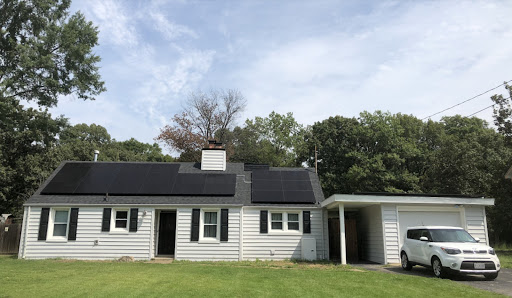
Do HOA Covenants Influence Your Selection Of Virginia Solar Panel Installation Provider?
HOA rules impact Virginia Solar Panel Installation Companies by placing legal boundaries on the visual and structural requirements that home associations can enforce on your project. Because state law prioritizes renewable energy access, homeowners associations cannot impose guidelines that create unreasonable barriers to entry for residents seeking to install solar equipment.
“Any resale certificate issued pursuant to § 55.1-2309 given to a purchaser shall contain a statement setting forth any restriction, limitation, or prohibition on the right of an owner to install or use solar energy collection devices on his property.” — communitypay.us
When you are researching Virginia solar panel installation companies worth hiring, verify that your chosen vendor comprehends the specific protective laws regulating these common interest communities. These regulations act to balance community standards with your right to produce clean energy. Specifically, an association cannot prohibit a solar installation unless their restrictions meet the following criteria:
- Cost Impact: Any stipulation that raises the total project expense by more than 5% is legally unenforceable.
- Performance Impact: Any directive that reduces the projected effectiveness or energy output of the system by more than 10% is prohibited.
- Safety and Compliance: Associations may still mandate that installations comply with standard building codes and safety regulations.
Navigating these rules requires a clear comprehension of how your system architecture might initiate an association review. The following table summarizes the thresholds installers must maintain to ensure your project remains compliant with local governing documents:
| Restriction Type | Legal Threshold |
|---|---|
| Project Cost Increase | Maximum 5% over base quote |
| System Performance Loss | Maximum 10% reduction |
| Approval Authority | Restricted to sensible aesthetic criteria |
Review your association’s specific architectural guidelines before completing your solar proposal to identify any potential discrepancies regarding board positioning or visibility.
Utilizing The Switch Together Program To Pinpoint Top Virginia Solar Panel Installation Providers
The bulk-buy program is a regional bulk-purchasing initiative that leverages shared consumer demand to lower the cost of a solar fitting through a rival reverse auction process. By gathering homeowners into a single buying group, the program invites qualified installers to bid for the project portfolio, which compels them to sharpen their pricing models beyond what you might receive in an individual price quote. This structure assists you recognize Which Virginia companies specialize in solar panel installation by filtering for those capable of handling large-scale, uniform projects while maintaining the rigorous quality standards demanded by the initiative.
“Virginia Shared Solar Program (Community Solar), Rebate, Dominion Energy and Appalachian Power customers can subscribe to a share of.” — dominionenergy.com
When engaging in this program, you gain from a streamlined procurement path that varies substantially from the traditional market method:
- Competitive Bidding: Installers provide their most aggressive pricing to secure the group contract, often reducing the standard $2.53 per watt market average.
- Vetted Standards: Participating installers must meet pre-defined criteria, ensuring they possess the required skill for local residential projects.
- Simplified Comparison: The program standardizes the scope of work, making it easier to assess competing offers based on equipment quality rather than confusing service inclusions.
- Volume Savings: Collective buying power allows for bulk material acquisition, which translates into lower overhead expenses for your specific installation.
Review the specific equipment brands and service warranties provided through the current cycle to ensure they align with your home’s energy production requirements.
Can Your Roof Qualify For Solar Panel Installation With 4.2–4.7 Peak Sun Hours Daily?
A roof is suitable for solar setup when its physical properties allow it to capture the regional average of 4.2 to 4.7 peak sun hours per day efficiently. Installers analyze these conditions to guarantee that the energy production model precisely reflects the physical realities of your home, as orientation, pitch, and shading determine how much sunlight your system converts into electricity.
When you assess potential projects, understanding How Virginia solar panel installation companies compare in their site analysis methods is essential. A professional assessment usually involves examining various critical structural and environmental variables:
| Factor | Optimal Condition | Impact on Productivity |
|---|---|---|
| Orientation | South-facing | Increases direct exposure to sunlight. |
| Pitch | 30 to 45 degrees | Aligns panels with the sun's periodic path. |
| Shading | Zero obstruction | Prevents voltage drops due to partial shade. |
| Roof Age | Less than 10 years | Avoids the necessity for premature system removal. |
Beyond these variables, installers utilize specialized software to simulate irradiance levels, accounting for seasonal tree growth and adjacent structures that might project shadows during peak production windows. If your roof is nearing the end of its useful life, you should emphasize a roof replacement before scheduling an installation to avoid expensive maintenance later. Verify the residual lifespan of your roofing materials and inspect for any structural vulnerabilities that might require strengthening to sustain the weight of a mounted array.

Table of Contents
- – How To Select The Best Virginia Solar Panel Ins...
- – How Top-Rated Solar Panel Installation Special...
- – Making Sense Of The 1,200 W Plug-in Solar Cap ...
- – Do HOA Covenants Influence Your Selection Of V...
- – Utilizing The Switch Together Program To Pinpo...
- – Can Your Roof Qualify For Solar Panel Installa...
Latest Posts
Grasping The Method With Delaware Solar Panel Installation Companies
Get The Most From Your Maryland Solar Panel Installation Investment
How Do You Discover Reliable Virginia Solar Panel Installation Companies?
More
Latest Posts
Grasping The Method With Delaware Solar Panel Installation Companies
Get The Most From Your Maryland Solar Panel Installation Investment
How Do You Discover Reliable Virginia Solar Panel Installation Companies?